
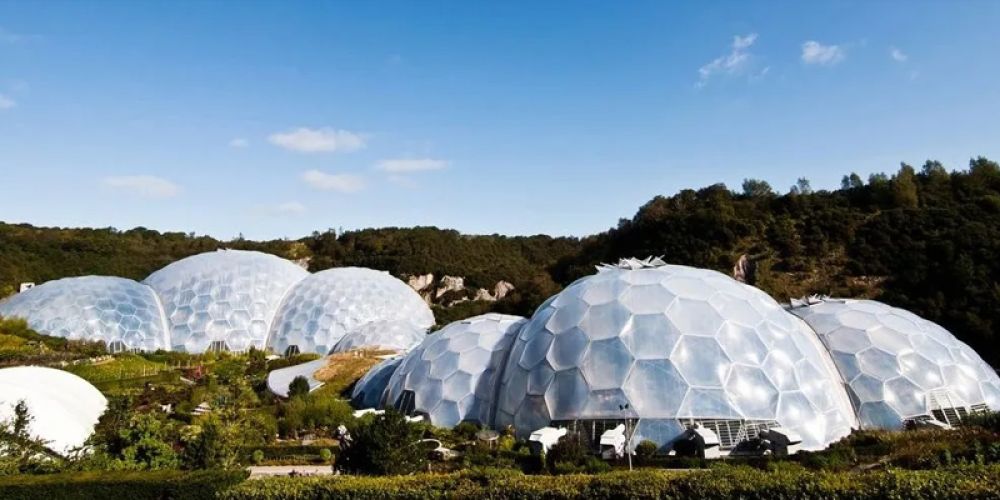
The membrane structure of the Eden Project in the UK is a perfect fusion of engineering and nature. Its core is the ETFE air-cushion membrane structure, a modern technology that uses lightweight, translucent ETFE membrane material to create inflatable cushion units. The project uses hexagonal and pentagonal air-cushion units, supported by a steel frame, to form eight enormous domes with a total area of 29,200 square meters.
Core Technical Features:
Materials and Construction: The ETFE membrane material is only 0.1-0.35mm thick, with a light transmittance of up to 95%, providing better insulation than glass. The air cushions are formed by stacking three layers of membrane and inflating them; the air layer provides insulation, and the air pressure is adjustable to adapt to the weather.
Structural Advantages: The hexagonal geometry adapts to arched architecture; prefabrication in the factory followed by on-site assembly makes construction convenient and cost-effective. The air-cushion units are lightweight (0.15-0.35kg/m²), yet have a tensile strength of 52N/mm² and a lifespan of 25-35 years.
Dynamic Adjustment: The air cushion pressure can be adjusted according to temperature (e.g., pressurization for enhanced insulation in winter, depressurization for cooling in summer), achieving natural ventilation and temperature control.
Design and Function: Biome Simulation: The dome simulates a tropical rainforest and warm climate, showcasing global plant diversity. Hexagonal air cushion units range in diameter from 5 to 11 meters, covering an area of 29,200 square meters.
Sustainability: The project utilizes rainwater harvesting, solar power generation, and geothermal heating. The membrane structure itself is recyclable, embodying environmental protection principles.
History and Impact: Construction Process: Proposed by musician Tim Smit in 1994, it cost £130 million and opened in 2001 after seven years of construction. The structural design was completed by Anthony Han Owo Ellap Collaboration, employing the MERO spatial frame system.
Industry Impact: As the world's first large-scale ETFE air cushion building, Eden Project promoted the application of this technology in ecological architecture, such as the Masoala Rainforest Pavilion in Zurich (2002).
Visitor Experience
Interactive Education: Visitors can stroll through the rainforest, explore the connection between plants and human life (such as herb and coffee cultivation), and participate in exhibitions and educational activities.
Visual Stunning: Looking up from the inside, the blue sky and white clouds intertwine with the membrane structure, creating a fantastical, "elf-like" space.
.jpg)
In the construction field, the heat-sealing production methods for different new membrane materials vary depending on…
.jpg)
In the construction field, the heat-sealing of PVDF membrane materials is mainly achieved through processes such…
.jpg)
Due to its unique molecular structure and excellent overall performance, PVDF (polyvinylidene fluoride) membrane material is…
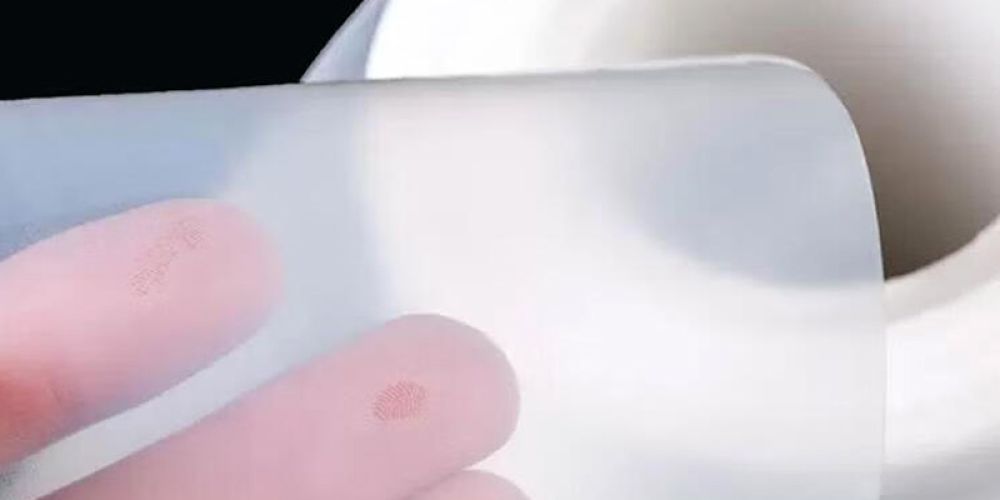
Chemical Inertness: Virtually unreactive with almost all chemical substances; resistant to acids, alkalis, and organic solvents…
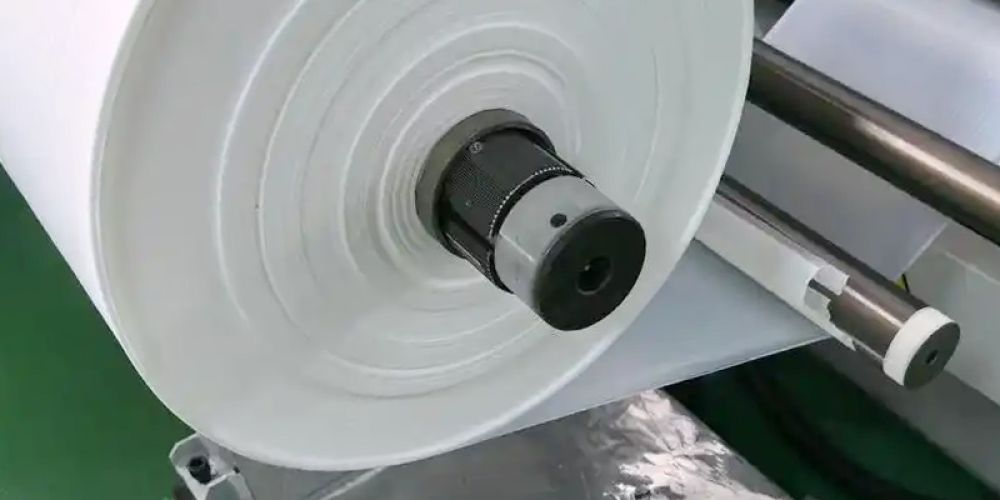
PTFE (polytetrafluoroethylene) film is a high-performance engineering plastic film renowned for its excellent chemical stability, high-temperature…
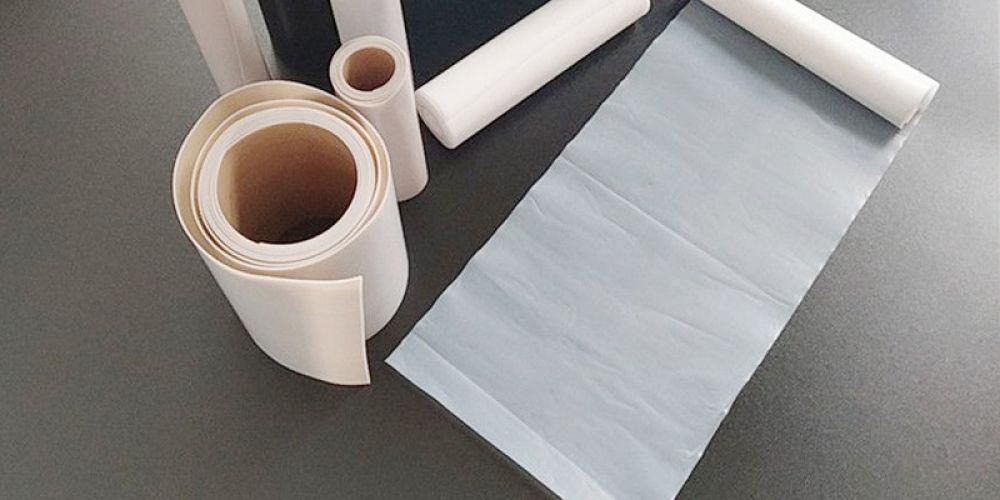
Microporous Structure Porosity exceeds 85%, with 1.4 billion micropores per square centimeter and pore sizes ranging…