

High-frequency welding machines play a pivotal role in the manufacturing of oil booms. They utilize high-frequency vibration to induce molecular polarization and heat generation within the membrane material, thereby achieving efficient and robust bonding. Below is a detailed analysis of the application of high-frequency welding machines in oil boom production:
I. Core Role of High-Frequency Welding Machines in Oil Boom Manufacturing
Achieving seamless bonding of membrane materials
Oil booms are typically constructed from polymer materials such as PVC, PU, or rubber-coated fabrics. They require welding to form a continuous, sealed structure capable of preventing oil leakage.
High-frequency welding machines utilize a high-frequency electric field to cause molecular polarization and frictional heating within the material. This achieves fusion at the molecular level, creating a seamless bond with strength equivalent to the base material, thereby eliminating the leakage risks associated with traditional sewing or adhesive bonding methods.
Accommodating complex structural welding
Oil booms consist of components such as floats, skirts, and ballast chains, requiring multiple welding stages for assembly.
By utilizing customized molds, high-frequency welding machines can precisely execute complex weld paths—including straight lines, arcs, and circles—to meet the requirements of the boom's three-dimensional structural design.
II. Technical Advantages of High-Frequency Welding Machines in Oil Boom Manufacturing
High efficiency and energy savings; increased production capacity
Welding speed: High-frequency welding machines can achieve speeds of 5–15 meters per minute, representing a 3- to 5-fold increase in efficiency compared to traditional hot-air welding.
Energy consumption control: Heat is generated only within the welding zone, and standby power consumption is below 500W; overall energy consumption is reduced by more than 40% compared to adhesive bonding processes.
Environmentally friendly and safe; compliant with standards
Pollution-free welding: The process eliminates the need for solvent-based adhesives, preventing volatile organic compound (VOC) emissions and meeting ISO 14001 environmental management system requirements.
Spark suppression system: Equipped with an NL5557 spark protection device, the machine cuts off high-frequency output within 0.1 seconds upon detecting arcing (sparking) at the mold, preventing material burn-through or fire hazards.
Consistent quality and extended service life
Weld seam strength: The tensile strength of high-frequency welded seams in oil booms can exceed 180N/5cm, surpassing 90% of the base material's strength. Weather Resistance: Excellent sealing in the welded area; withstands extreme temperatures ranging from -30°C to +70°C; suitable for long-term use in marine environments.
III. Typical Applications of High-Frequency Welding Machines in Oil Boom Manufacturing
Welding of Float Bodies and Skirts
Process Requirements: Float bodies must withstand seawater buoyancy; skirts must fit tightly against the water surface to prevent oil leakage.
Solution: A dual-sliding-table high-frequency welding machine is used to simultaneously weld the float body and skirt, keeping the weld width within 8mm to ensure structural strength and sealing integrity.
Ballast Chain Installation
Process Requirements: The ballast chain must be welded to the bottom of the skirt to maintain the oil boom's vertical stability.
Solution: A servo-motor-driven high-frequency welding machine enables precise positioning and welding of the ballast chain, with a welding depth error of ≤0.5mm.
End-Section Sealing
Process Requirements: The ends of the oil boom must be sealed to prevent oil leakage at the connection points.
Solution: A ring-shaped mold combined with a high-frequency welding machine achieves a seamless 360° weld at the ends, meeting the IPX8 waterproof rating standard.
IV. Innovative Applications of High-Frequency Welding Machines in Oil Boom Manufacturing
Intelligent Welding System
Integrates a PLC control system and a visual inspection module to monitor weld quality in real-time and automatically adjust parameters, raising the qualified weld rate to over 99.5%.
Modular Design
Supports rapid mold changes; a single machine can weld oil booms of various specifications, reducing equipment investment and floor space requirements.
Lightweight Structure
The welding head is manufactured using carbon fiber-reinforced composite materials, reducing weight by 30%; this facilitates operator movement and positioning, enhancing production flexibility.
V. Application Case: Upgrading an Oil Boom Production Line for a Marine Environmental Protection Company
Issues Prior to Upgrade
Used traditional hot-air guns for welding; resulted in low efficiency (only 2 oil booms completed per hour), low yield rates (85%), and high energy consumption (welding cost of 5.2 RMB per unit). Post-modification results
Following the introduction of the high-frequency welding machine, production efficiency increased to 8 units per hour, the yield rate reached 99.2%, the welding cost per unit dropped to 2.1 yuan, and annual production costs were reduced by over 1.2 million yuan.
.jpg)
In the construction field, the heat-sealing production methods for different new membrane materials vary depending on…
.jpg)
In the construction field, the heat-sealing of PVDF membrane materials is mainly achieved through processes such…
.jpg)
Due to its unique molecular structure and excellent overall performance, PVDF (polyvinylidene fluoride) membrane material is…

Chemical Inertness: Virtually unreactive with almost all chemical substances; resistant to acids, alkalis, and organic solvents…
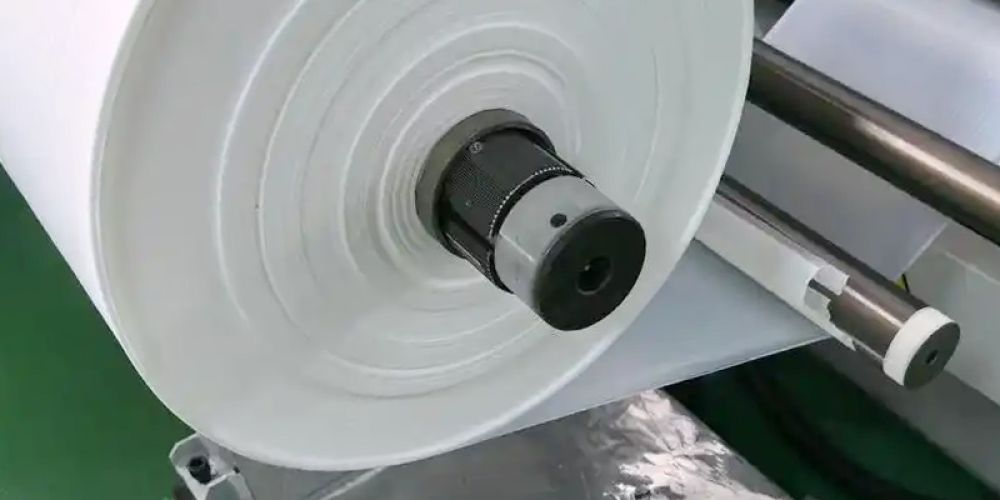
PTFE (polytetrafluoroethylene) film is a high-performance engineering plastic film renowned for its excellent chemical stability, high-temperature…
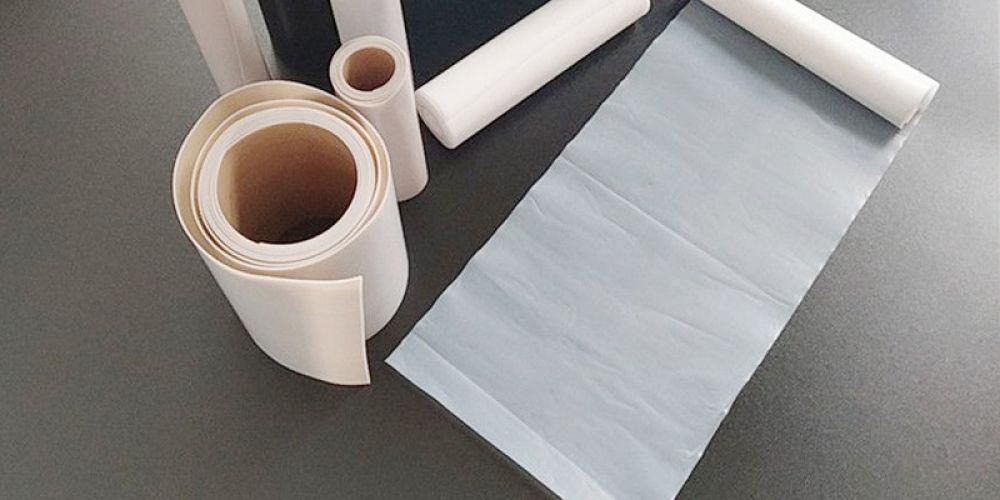
Microporous Structure Porosity exceeds 85%, with 1.4 billion micropores per square centimeter and pore sizes ranging…