
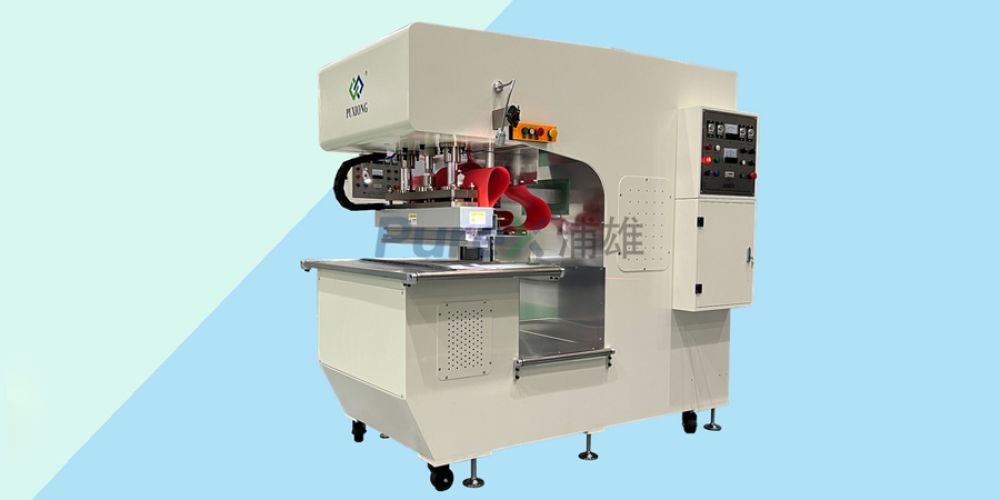
The structure of the high-frequency welding machine for composite membrane materials comprises core components, safety protection devices, auxiliary function modules, and optional configurations, as detailed below:
I. Core Components
High-Frequency Oscillation System
Utilizes a European-style square coaxial structure to ensure stable and powerful high-frequency output, complying with international industrial frequency standards (e.g., 13.56 MHz, 27.12 MHz, 40.68 MHz).
Generates heat through the polarization of membrane material molecules within a high-frequency electric field, thereby achieving welding.
Worktable and Mold System
Worktable: Supports dual sliding table or rotary table designs, allowing operators to load products alternately and thereby increasing production efficiency.
Mold: Customized based on material characteristics; supports flat-plate or specific shape designs to meet diverse welding requirements. The mold is mounted on a pneumatic flat-plate holder, with customizable dimensions (e.g., a 400×200 mm rectangular plate).
Drive and Control System
Pneumatic Drive: Adjusts head pressure via air pressure regulation to meet the sealing requirements of different materials.
PLC & HMI: Enables automated operation, including parameter presets for mold preheating, welding time, and cooling time.
Servo Motor Drive: Supports automatic travel and precise positioning, achieving welding speeds of 5–10 meters per minute.
II. Safety Protection Devices
Spark Protection System
Equipped with an NL5557 spark protection device; immediately cuts off high-frequency output upon detecting mold arcing, with the mold automatically retracting to prevent damage.
High-sensitivity spark suppression circuitry detects unbalanced currents and instantly interrupts the oscillation circuit to minimize damage.
Current-Limiting Protection
Automatically cuts off high-frequency output if the output setting is excessive, protecting internal vacuum tubes from current overload damage.
Emergency Stop Device
Allows for the immediate cessation of high-frequency output and return of the mold to its home position during operation, ensuring operator safety.
III. Auxiliary Function Modules
Preheating and Constant Temperature System
Equipped with a 2000W heating element and thermostat to accelerate mold preheating and eliminate arcing.
Supports stepless temperature adjustment to accommodate the welding needs of various materials. Time Control System
Adjustable descent, welding, and cooling times (range: 0–10 seconds) ensure consistent welding quality.
Select models feature a four-stage timing system to support complex processing workflows.
Pressure Regulation System
Cylinder pressure can be freely adjusted based on material thickness and welding requirements, ensuring strong welds without damaging the material.
IV. Optional Configurations and Extended Functions
Laser Scanning Positioning System
Assists with precise positioning to enhance welding accuracy; ideal for high-precision membrane structure splicing.
Automated Loading and Unloading Mechanisms
Select models integrate automation modules to enable end-to-end automated production and minimize manual intervention.
Customized Design
Supports customization of parameters such as material feed span and welding length to meet diverse requirements for welding and joining canvas materials of various sizes.
.jpg)
In the construction field, the heat-sealing production methods for different new membrane materials vary depending on…
.jpg)
In the construction field, the heat-sealing of PVDF membrane materials is mainly achieved through processes such…
.jpg)
Due to its unique molecular structure and excellent overall performance, PVDF (polyvinylidene fluoride) membrane material is…
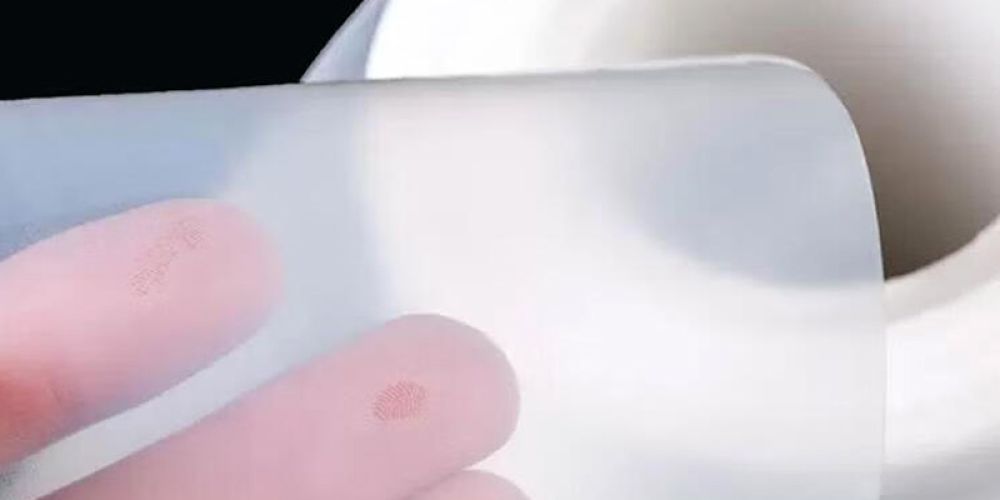
Chemical Inertness: Virtually unreactive with almost all chemical substances; resistant to acids, alkalis, and organic solvents…
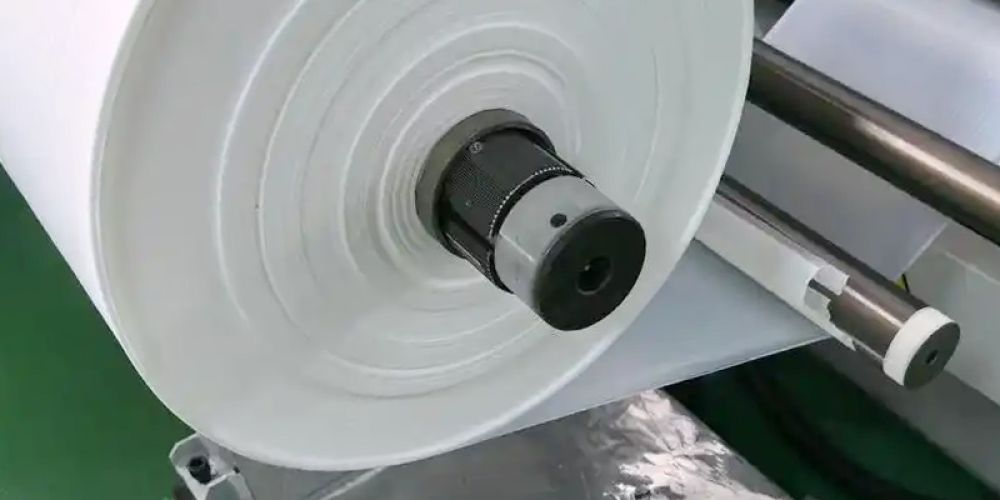
PTFE (polytetrafluoroethylene) film is a high-performance engineering plastic film renowned for its excellent chemical stability, high-temperature…
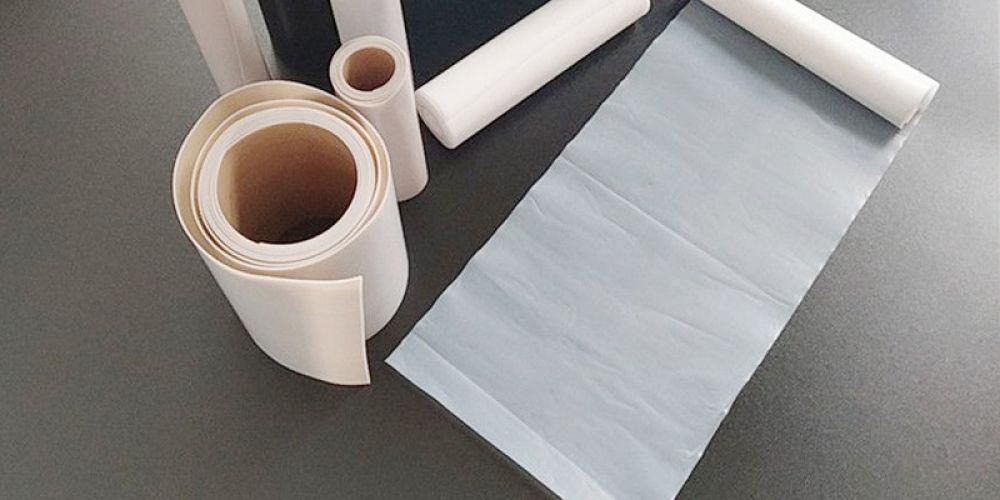
Microporous Structure Porosity exceeds 85%, with 1.4 billion micropores per square centimeter and pore sizes ranging…