
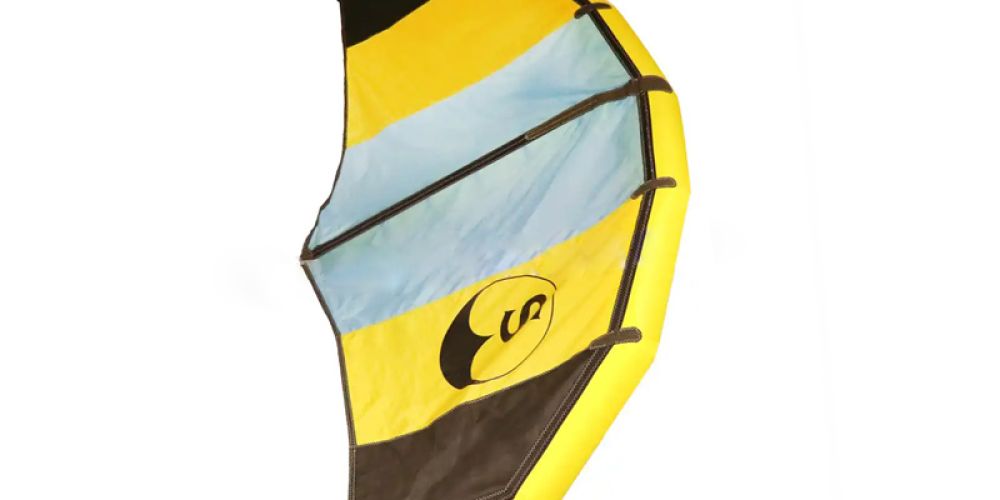
I. TPU Inflatable Bladders: Structural Innovation and Performance Breakthroughs
Seamless Integrated Design
Modern kitesurfing bladders utilize an integrated extrusion process for the main and strut tubes. The main tube features a tubular film structure that is thicker in the middle and tapers at both ends, while the strut tubes feature a tapered tubular structure (thick at one end, thin at the other). Both are sealed at the ends via high-frequency welding to create a fully airtight inner bladder.
Advantages: Eliminates the risk of air leaks associated with the long side-seam welds found in traditional bladders, thereby reducing the likelihood of accidents caused by equipment defects.
Case Study: Shanghai Puxiong extended bladder lifespan by over 30% and reduced weight by 15% through this seamless structural design.
Material Performance Optimization
TPU (Thermoplastic Polyurethane) offers excellent tensile strength, abrasion resistance, and low-temperature performance (withstanding -60°C to 120°C), with resilience far superior to traditional PVC or PU materials.
Data Support: TPU tubes exhibit a tear strength exceeding 50 N/mm and can withstand frequent inflation/deflation cycles (≥100,000 times) without deformation.
Environmental Friendliness: TPU releases no toxic gases during combustion and naturally decomposes within 3–5 years when buried in soil, complying with RoHS environmental standards.
Customization Capabilities
Tube lay-flat widths range from 40mm to 400mm, with thicknesses from 0.1mm to 4mm; customization is available for special configurations such as I-shaped, cross-shaped, and T-shaped structures.
Application Scenarios: Performance can be tailored to specific needs across the entire spectrum, from entry-level training kites to high-performance competition kites.
II. Heat Sealing Technology: Process Innovations in High-Frequency Welding
High-Frequency Welding Principles
Utilizes a 27.12 MHz high-frequency electromagnetic field to induce vibration and friction among TPU molecular chains, generating heat to achieve localized material fusion.
Advantages:
High-Quality Welds: Deep, strong welds with a smooth, impurity-free surface finish.
Increased Efficiency: Welding time per tube is reduced to 3–5 seconds—an 80% increase in efficiency compared to traditional hot-air welding.
Automation Compatibility: Can be integrated into assembly lines, enabling batch quality inspection and data traceability. Process Parameter Control
Key parameters: Output power (9000 W), oscillation frequency (27.12 MHz ± 0.6%), heat-sealing time (3–5 s), and pressure (0.2–0.5 MPa).
Commissioning and verification:
Insufficient power results in weak welds, while excessive power causes material wrinkling or dielectric breakdown.
High-frequency arcing issues are resolved through insulated mold design (e.g., PTFE coating).
Case study: Shanghai Puxiong significantly improved the pass rate for airbag airtightness testing through parameter optimization.
Quality Inspection Standards
Airtightness test: Inflate to an overpressure of 20 kPa; a pressure drop of ≤5% over 24 hours constitutes a pass.
Peel strength test: Peel force at the weld seam must be ≥50 N/15 mm (referencing ISO 6134).
Non-destructive testing: Ultrasonic flaw detection is used to inspect for internal weld defects, ensuring zero risk of air leakage.
.jpg)
In the construction field, the heat-sealing production methods for different new membrane materials vary depending on…
.jpg)
In the construction field, the heat-sealing of PVDF membrane materials is mainly achieved through processes such…
.jpg)
Due to its unique molecular structure and excellent overall performance, PVDF (polyvinylidene fluoride) membrane material is…
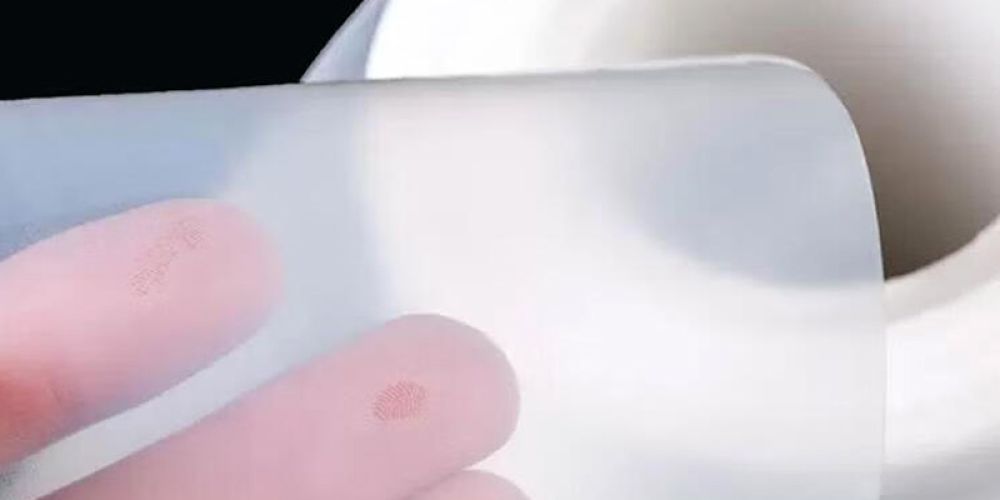
Chemical Inertness: Virtually unreactive with almost all chemical substances; resistant to acids, alkalis, and organic solvents…
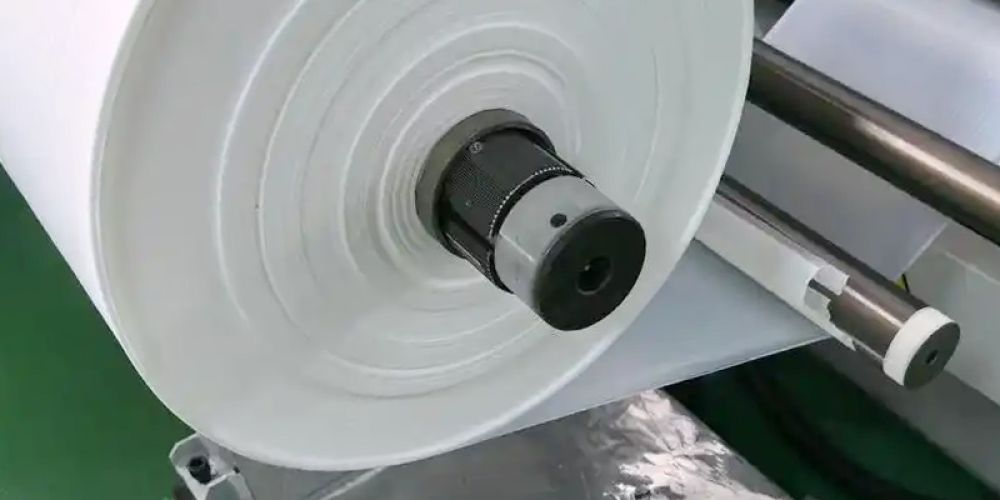
PTFE (polytetrafluoroethylene) film is a high-performance engineering plastic film renowned for its excellent chemical stability, high-temperature…
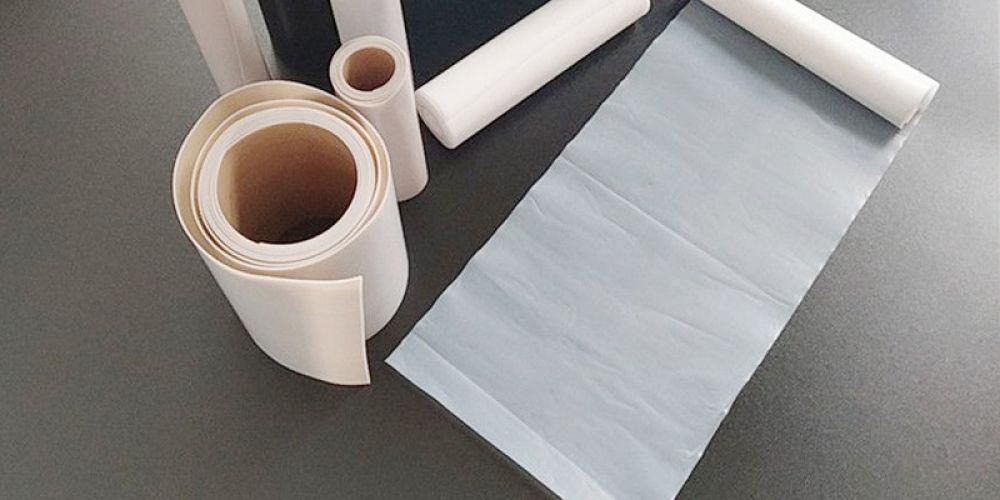
Microporous Structure Porosity exceeds 85%, with 1.4 billion micropores per square centimeter and pore sizes ranging…