
.jpg)
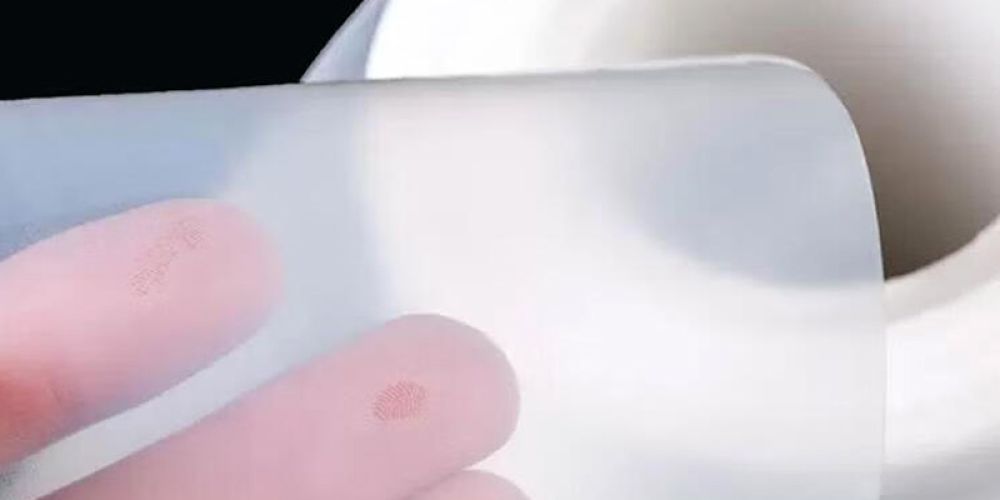
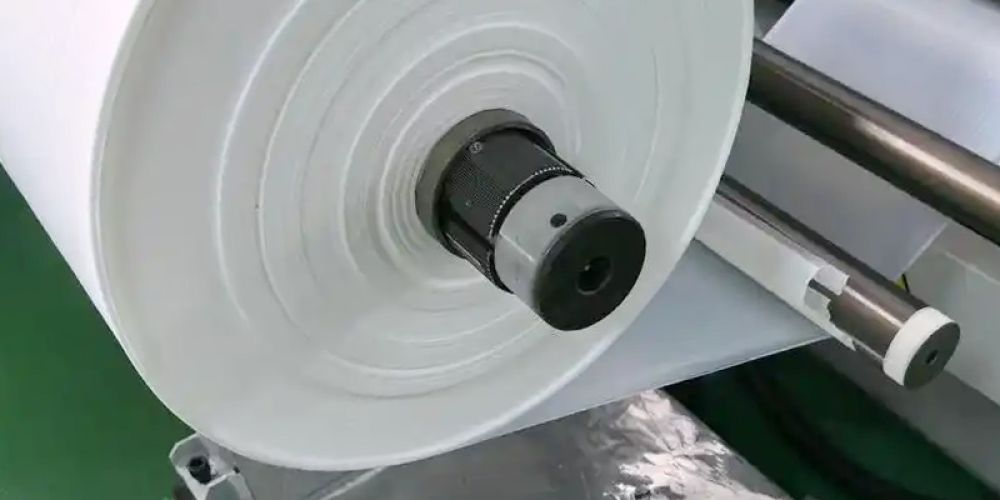
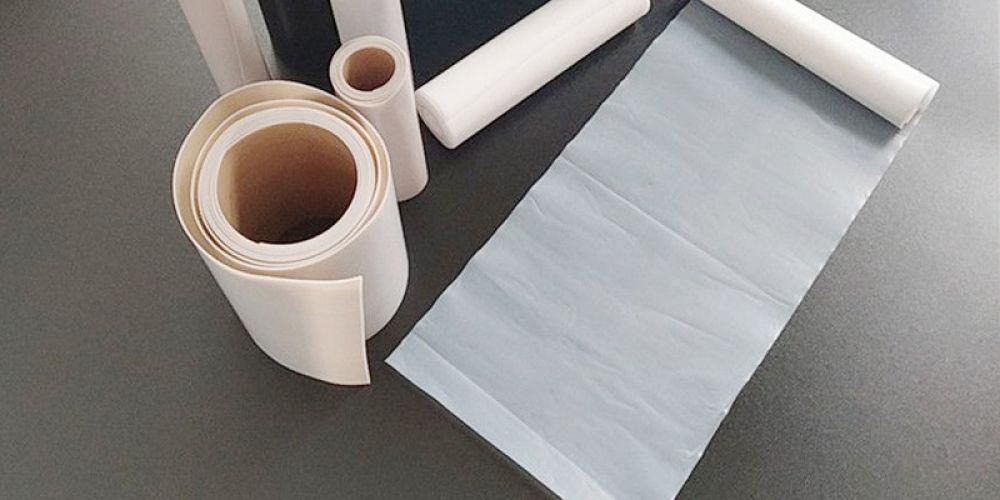
Due to its chemical inertness and high melting point (327℃), PTFE (polytetrafluoroethylene) membranes present significant challenges for heat sealing and welding, requiring a combination of material properties and process optimization to achieve reliable connections. The following is a detailed analysis:
1. Welding Challenges Due to Material Properties
* High Melting Point and Low Melt Viscosity: PTFE requires heating to above 327℃ to melt, but its viscosity after melting is extremely high (10⁶ Pa·s), resulting in poor fluidity and difficulty in uniformly filling the weld seam.
* High Coefficient of Thermal Expansion: Uneven shrinkage during welding cooling can easily generate internal stress, leading to weld cracking or deformation.
* Low Surface Energy: PTFE has a surface energy of only 18.5 mN/m, requiring plasma treatment or chemical etching to improve adhesion.
2. Key Welding Processes:
Constant-temperature hot plate welding for large-area membrane splicing (340-380℃) requires precise temperature control (±2℃) and is prone to bubble formation.
3. Process Optimization Directions:
Surface Treatment: Plasma treatment can increase surface energy to 72 mN/m, significantly improving weld strength.
Filler Modification: Adding glass fiber or carbon fiber (5%-10%) can reduce the coefficient of thermal expansion and decrease the risk of weld cracking.
Parameter Control: When the welding pressure is 0.3MPa and the time is 8-15 seconds per weld point, the leakage rate can be reduced to below 0.01ml/min·m².
4. Typical Application Cases:
Architectural Membrane Structures: PTFE membrane materials are spliced using hot air welding. The weld strength must be ≥85% of the base material strength to meet the 25-year service life requirement. Medical devices: High-frequency welding is used for sealing PTFE catheters, requiring helium mass spectrometry leak detection (leakage rate ≤ 1 × 10⁻⁹ Pa·m³/s).
Conclusion: Heat sealing of PTFE membranes is challenging, but it can be effectively addressed through process optimization (e.g., surface treatment, precise parameter control) and specialized equipment (e.g., constant-temperature hot plate welding). In practical applications, the appropriate process should be selected based on the membrane thickness and strength requirements.
.jpg)
In the construction field, the heat-sealing production methods for different new membrane materials vary depending on…
.jpg)
In the construction field, the heat-sealing of PVDF membrane materials is mainly achieved through processes such…
.jpg)
Due to its unique molecular structure and excellent overall performance, PVDF (polyvinylidene fluoride) membrane material is…
Chemical Inertness: Virtually unreactive with almost all chemical substances; resistant to acids, alkalis, and organic solvents…
PTFE (polytetrafluoroethylene) film is a high-performance engineering plastic film renowned for its excellent chemical stability, high-temperature…
Microporous Structure Porosity exceeds 85%, with 1.4 billion micropores per square centimeter and pore sizes ranging…