• info@chinapuxiong.com

BLOGS

All Blogs

Detailed Explanation of the Characteristics and Applications of ETFE membrane materials

I. Core Characteristics
1. Lightweight and High Strength

  • Weight Advantage: ETFE film density is only 1.75 g/cm³, with a weight of 1% of glass (0.15–0.35 kg/m²), significantly reducing structural load and foundation costs.
  • Mechanical Properties: Tensile strength exceeds 40 MPa (twice that of PTFE), with a fracture elongation rate of 500% and an extension rate of 420%–440%, enabling large deformations without rupture, ideal for long-span structures.

2. Outstanding Optical Performance

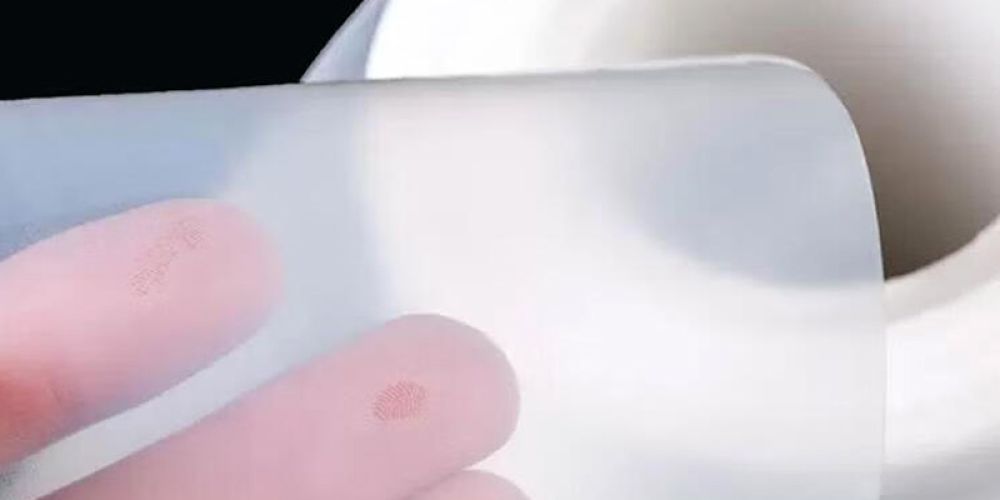
  • Light Transmittance: Single-layer colorless transparent film achieves up to 95% transmittance, outperforming glass (80%–90%) and PE (<90%). Light transmittance can be adjusted (50%–95%) via surface printing or thickness control to meet diverse lighting needs.
  • UV Blocking: Blocks over 90% of UVA/UVB, protecting indoor items from fading.

3. Weather Resistance and Durability

  • Temperature Adaptability: Operational temperature ranges from -200°C to 150°C, with a melting point of 200°C. No deformation or aging occurs under high temperatures.
  • Anti-Aging: After 16,000 hours of accelerated weathering tests (equivalent to 30+ years of real-world exposure), mechanical and optical properties remain intact. Design lifespan: 25–35 years, with stable performance for over 20 years in practice.

4. Self-Cleaning and Eco-Friendliness

  • Smooth Surface: Extremely low friction coefficient allows dust and stains to be washed away by rainwater. Manual cleaning intervals can exceed 4 years.
  • Recyclability: Waste material can be thermally melted into pellets for reuse, achieving near 100% recycling efficiency, aligning with green building standards.

5. Fire Safety

  • Flame Retardancy: Rated B1 (per DIN4102 standard), no dripping during combustion. Critical oxygen index: 32% (higher than atmospheric 21%), enabling self-extinguishing.
  • Impact Resistance: Withstands hail impact, leaving only dents without cracking (unlike fragile glass).

6. Thermal Insulation

  • Air Cushion Structure: When inflated, K-value reaches 2.0 W/m&sup2;·K, offering three times the insulation of glass, dramatically reducing building energy consumption.

II. Main Applications
1. Architecture

  • Landmark Projects:
    • Beijing Water Cube: Exterior comprises 3,065 ETFE air cushions, covering 100,000 m&sup2; (expanded film area: 260,000 m&sup2;), the world’s largest ETFE membrane structure.
    • UK Eden Project: Tropical plant greenhouses use ETFE films for full-spectrum light transmission, enhancing plant growth.
    • Munich Allianz Arena: ETFE façade enables dynamic lighting effects, elevating spectator experiences.
  • Design Forms:
    • Single-layer films for truss chord lighting zones or combined with PVC/PTFE for visual diversity.
    • Double-layer air cushions (inflated for tension) suit long-span roofs (e.g., Water Cube’s arched cushion design).
  • Advantages: Lightweight, high transparency, self-cleaning; enables column-free spans (up to 50 meters) while reducing lighting and HVAC energy use.

2. Agriculture

  • Greenhouses: ETFE’s original application, utilizing full-spectrum light to enhance infrared absorption, offsetting nighttime radiative cooling, boosting crop yields.
  • Botanical/Zoological Facilities: Enables tropical plant growth or animal habitats in non-native climates (e.g., Eden Project’s tropical research base).

3. Photovoltaics (PV)

  • Flexible PV Components: ETFE replaces traditional PVDF/PVF backsheets, offering superior weather resistance and hydrophobicity for lightweight, portable uses (e.g., RVs, outdoor activities, disaster relief).
  • Structure: Layers include upper ETFE, EVA, PV cells, EVA, lower ETFE; thickness <1 mm, weight 1 kg/m&sup2;.

4. Aerospace & Electronics

  • Wire Insulation: High mechanical strength, low density, and radiation resistance make ETFE ideal for aerospace cable insulation.
  • Electronic Encapsulation: Used in semiconductors/LEDs for ≥95% light transmittance and durability, extending product lifespans.

5. Environmental & Specialized Uses

  • Environmental Facilities: Resistant to harsh chemical/marine environments, suitable for industrial or coastal infrastructure.
  • Medical Applications: Serves as sterile packaging or wound dressing release layers, preventing contamination.