I. Application Fields
PVC architectural membrane structures are widely used in the following scenarios due to their lightweight, flexibility, and cost-effectiveness:
1. Temporary & Mid-to-Low-End Construction
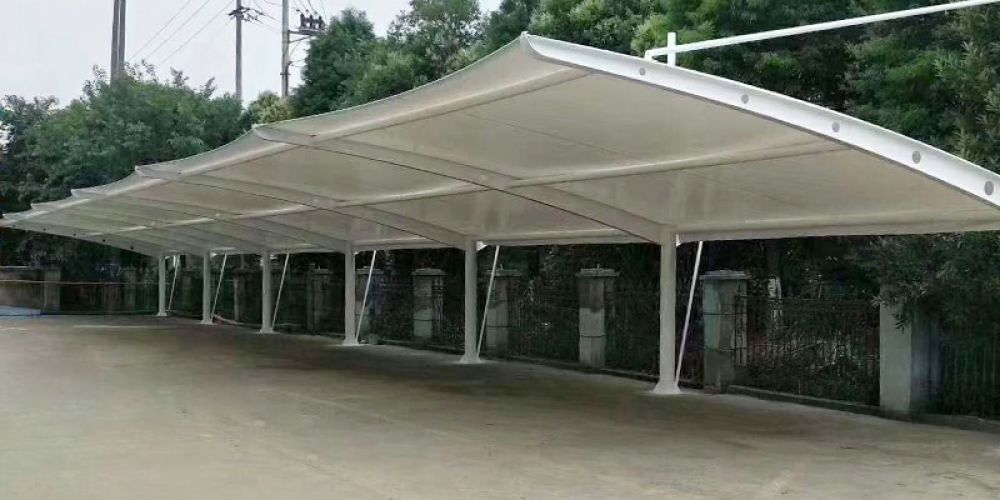
- Canopies & Sunshades:
Deployed in parking lots, residential areas, and commercial streets.
Cost: ~RMB 300–350 per sq.m; short construction cycle for rapid deployment.
- Agricultural Facilities:
Greenhouses, livestock shelters, etc., leveraging waterproof and light-transmissive properties.
- Public Infrastructure:
Temporary restrooms, fitness plazas, waste collection houses, pavilions, landscape installations, stages, and tents.
2. Commercial & Brand Promotion
- Advertising & Branding:
Customizable PVC membranes for billboards, event tents, and branded shelters.
- Covered Walkways & Entrances:
Functional and aesthetic installations at malls, hotels, and public buildings.
3. Sports & Recreation
- Auxiliary Sports Facilities:
Fencing for sports fields, swimming pools, and outdoor classrooms, adaptable to dynamic needs.
II. Limitations
1. Durability Challenges
- UV Degradation:
Prolonged sun exposure causes fading and brittleness (lifespan: several years to over a decade).
- Creep & Prestress Loss:
Structural deformation under sustained tension, compromising stability.
2. Poor Thermal & Acoustic Insulation
- Light-Transmission vs. Heat Retention:
High light transmittance raises indoor temperatures, necessitating additional insulation.
- Limited Noise Reduction:
Minimal soundproofing with single-layer membranes.
3. Low Self-Cleaning Performance
- Dust Accumulation:
Prone to dust adhesion; harder to clean compared to glass.
4. Environmental Sensitivity
- Temperature Vulnerability:
Brittleness in cold, deformation in heat, impacting safety.
- Chemical Instability:
Degradation under prolonged acid/alkali exposure.
5. Sustainability Issues
- Pollution Risks:
Hazardous emissions during production; complex recycling processes and high costs.
III. Solutions
1. Enhanced Durability
- Advanced Coatings:
PVDF (polyvinylidene fluoride) or fluorocarbon coatings to resist UV/aging (lifespan: 15+ years).
- Composite Materials:
Hybrid designs with PTFE/ETFE membranes for improved resilience.
2. Improved Insulation
- Multi-Layer Structures:
Double-layer inflatable membranes with air gaps or sound-absorbing fillers.
- Thermal Reflective Layers:
Coatings or reflective films to reduce solar heat gain.
3. Self-Cleaning Upgrades
- Nano Coatings:
Photocatalytic nano self-cleaning coatings to decompose contaminants.
- Design Optimization:
Curved surfaces to minimize dust retention and leverage rainwater cleaning.
4. Environmental Adaptation
- Temperature Regulation:
Embedded thermoregulatory materials or ventilation systems.
- Chemical Resistance:
Anti-corrosion coatings or alloy support structures.
5. Sustainability Measures
- Eco-Friendly Production:
Low-pollution manufacturing processes.
- Recycling Innovation:
Cost-effective PVC recycling technologies to support a circular economy.
IV. Future Trends
PVC architectural membranes are evolving toward high-performance, multifunctional applications:
- Smart Integration:
Sensor-equipped systems for automated temperature, lighting, and cleaning control.
- Multifunctional Materials:
Composite membranes with integrated insulation, soundproofing, fire resistance, and self-cleaning.
- Sustainability Focus:
Green manufacturing and closed-loop recycling to reduce environmental impact and enhance market competitiveness.

.jpg)
.jpg)
.jpg)