
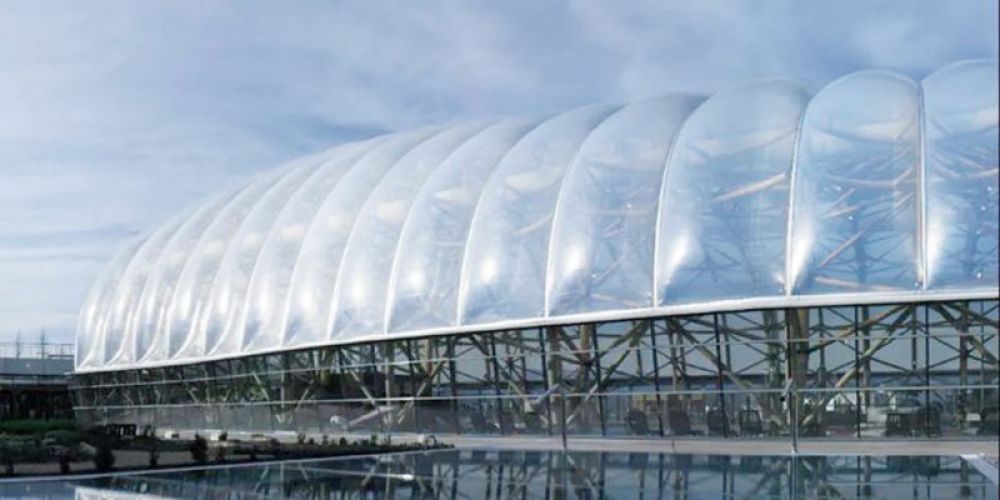
ETFE Membrane Structure Production via Heat-Sealing: A Precision Multi-Step Process
The production of ETFE membrane structures involves a precise and multi-step process, primarily including membrane cutting, heat-sealing welding, and air cushion (pillow) fabrication and installation. Among these, heat-sealing welding is the core step, utilizing thermal fusion technology to create strong and durable bonds between ETFE membrane materials. Below is a detailed introduction:
Design and Cutting
Based on architectural drawings and air cushion design requirements, the ETFE membrane is precisely cut. Considerations during cutting include membrane width, edge alignment, and aesthetics to ensure regular seam arrangement and avoid surface distortion.
Membrane Inspection
The cut membrane undergoes quality inspection to ensure there are no defects such as damage or wrinkles. Simultaneously, the membrane is cleaned to remove dust, stains, and other impurities, ensuring high-quality heat-sealing welds.
Principle of Heat-Sealing
Heat-sealing welding of ETFE membranes employs thermal fusion technology, where the membrane surface is heated to a molten state. Pressure is then applied to fuse the molten layers together, forming a strong and seamless bond.
Heat-Sealing Equipment
Specialized heat-sealing machines are used for welding. These devices precisely control heating temperature, pressure, and duration to ensure weld quality. Note: High-frequency or ultrasonic welding methods are not suitable for ETFE membranes; thermal fusion welding is the preferred technique.
Welding Steps
Key Considerations
Air Cushion Fabrication
The welded membranes are heat-sealed along the designed edges to form a complete unit, with edges finished appropriately. The air cushion is typically inflated with air or other lightweight gases, creating an enclosure capable of bearing external loads.
Air Cushion Installation
The fabricated air cushion is hoisted to the installation location, unfolded, and lightly tensioned to secure it within the boundary fixtures. During installation, ensure even flatness and tension distribution to avoid wrinkles or waves.
Inflation and Monitoring
After installation, the air cushion is inflated. Air supply hoses and monitoring/control systems are installed. Post-inflation, internal pressure and structural conditions are monitored to ensure they meet design specifications.
.jpg)
In the construction field, the heat-sealing production methods for different new membrane materials vary depending on…
.jpg)
In the construction field, the heat-sealing of PVDF membrane materials is mainly achieved through processes such…
.jpg)
Due to its unique molecular structure and excellent overall performance, PVDF (polyvinylidene fluoride) membrane material is…
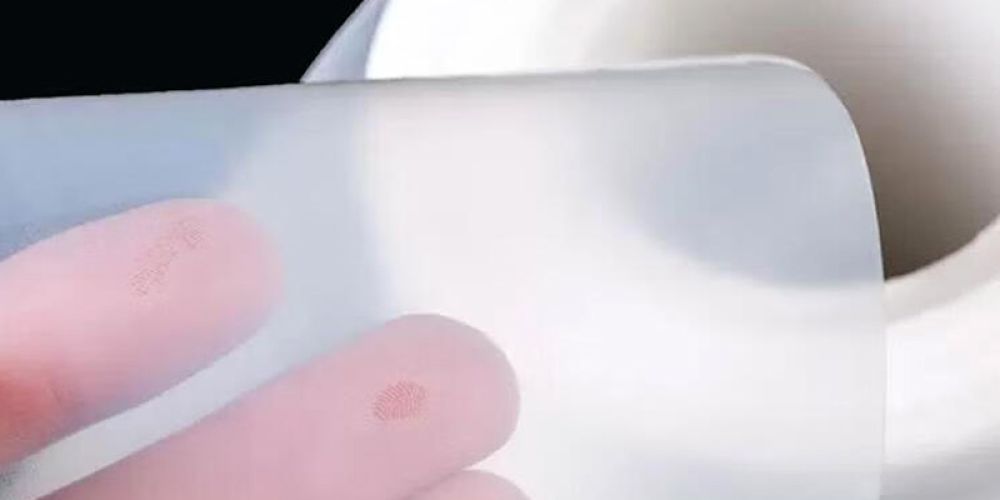
Chemical Inertness: Virtually unreactive with almost all chemical substances; resistant to acids, alkalis, and organic solvents…
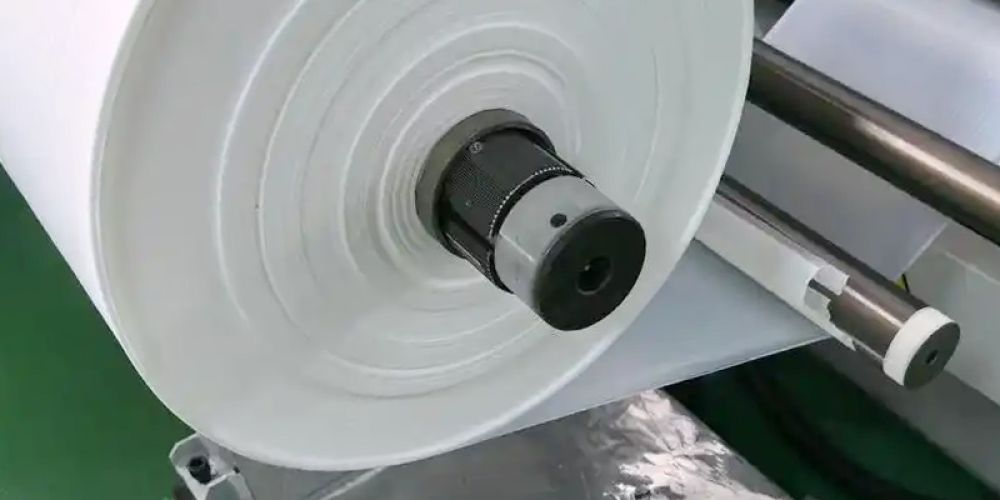
PTFE (polytetrafluoroethylene) film is a high-performance engineering plastic film renowned for its excellent chemical stability, high-temperature…
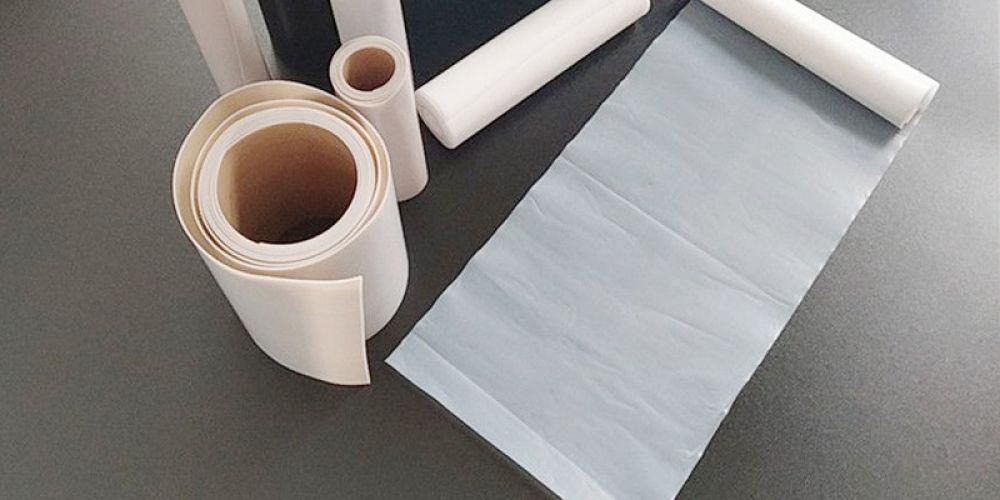
Microporous Structure Porosity exceeds 85%, with 1.4 billion micropores per square centimeter and pore sizes ranging…