• info@chinapuxiong.com

BLOGS

All Blogs

What are the technical features of the automated welding production line for membrane structure buildings

Technical Advantages

Improved Production Efficiency

  • Automated Process: The entire workflow—from material feeding and positioning to welding and unloading—is fully automated. A single production line can achieve a daily output of 500–1,000 m² (compared to 50–200 m² with traditional manual welding).
  • Parallel Processing Capability: With a multi-station design (e.g., multi-head welding machines), two or more welds can be processed simultaneously, reducing the production cycle by 30%–50%.

Enhanced Quality Stability

  • Online Inspection System: Integrated infrared thermometers monitor weld temperature, penetration, and defects (e.g., porosity, lack of fusion) in real time. Non-conforming products are automatically marked and sorted, increasing the product qualification rate to over 99.5%.
  • Data Traceability Function: Records production time, operators, process parameters, and other details for each weld, enabling rapid traceability and improvement of quality issues.

III. Industry Applications and Typical Cases

Large-Scale Stadiums

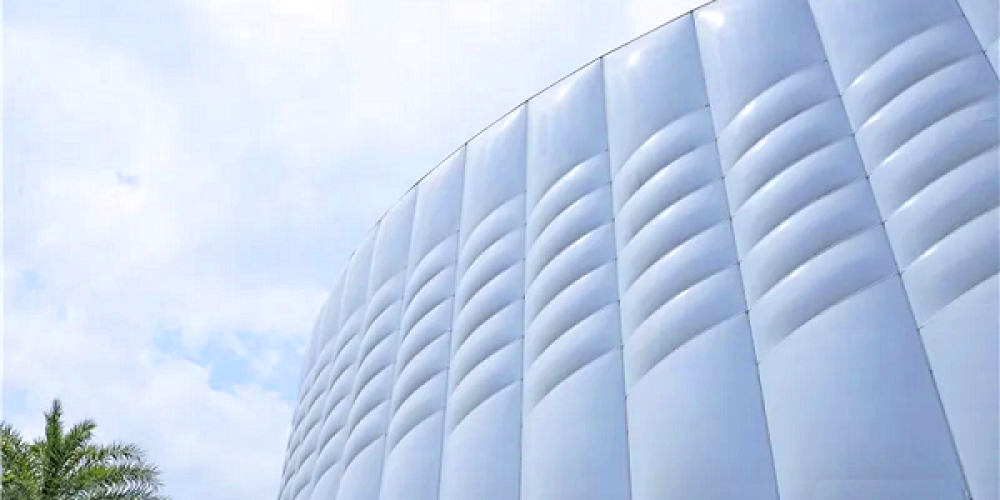
  • Case: The automated ETFE membrane welding production line was used for the Beijing 2022 Winter Olympics National Speed Skating Oval ("Ice Ribbon"). It achieved precise welding of 22 curved membrane strips, with weld light transmittance uniformity errors ≤2%, meeting both architectural aesthetic and functional requirements.

Environmental Facilities

  • Case: A landfill cover membrane project adopted an automated PVC welding line. Using hot-air welding technology, it achieved seamless splicing of 6m-wide membranes, with a daily welding area of 3,000 m²—six times more efficient than traditional manual welding.

Temporary Structures

  • Case: An emergency hospital construction project utilized automated PTFE membrane welding equipment. The welding and installation of 10,000 m² of membrane structure were completed within 48 hours, meeting rapid deployment needs.