
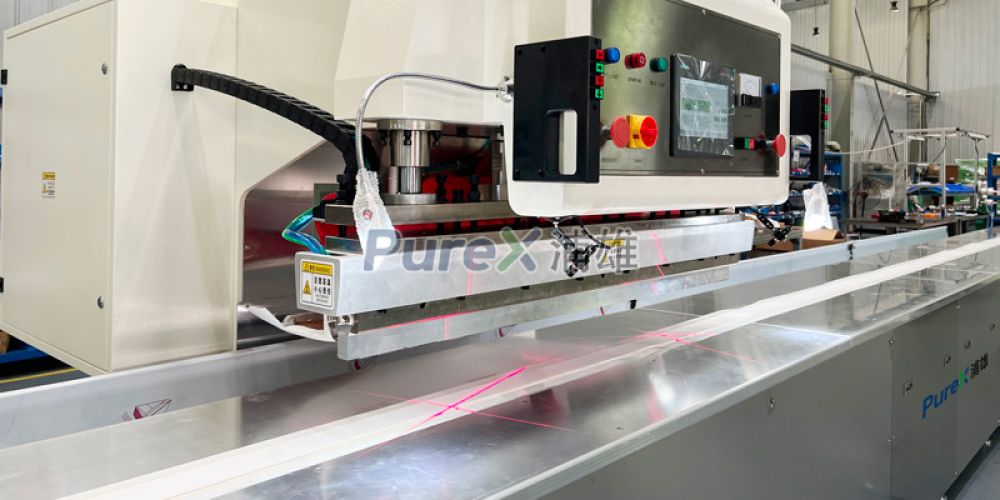
The track-mounted high-frequency welding machine for membrane materials is a high-efficiency welding device designed for thermoplastic membrane materials (such as PVC, TPU, PE, etc.). It achieves continuous, sealed welding of long or large-area membrane materials through "high-frequency electromagnetic induction heating + track-mounted moving welding." The following analysis covers its principles, structure, applications, advantages, and selection and maintenance:
.jpg)
I. Core Principle: High-Frequency Electromagnetic Induction Heating
The essence of high-frequency welding is to utilize high-frequency alternating current (typically 13.56MHz or 27.12MHz) to generate an alternating electromagnetic field. This causes polar molecules in the membrane material (such as water molecules and polar groups in plastics) to vibrate at high speed in the electromagnetic field. Intermolecular friction generates heat, leading to melting at the contact surface. Under pressure, the molten layers bond, and upon cooling, form a strong weld.
The track-mounted design controls the movement of the welding head (electrode) or worktable through a guide rail and drive system, enabling continuous welding of long seams, annular seams, or large areas, improving automation and efficiency.
II. Equipment Structure and Composition The track-mounted membrane high-frequency welding machine consists of five core modules:
High-Frequency Generation System: Generates high-frequency alternating current, the source of heating energy. Power determines the welding speed and adaptability to material thickness (thicker materials require higher power).
Welding Execution Module: Includes upper and lower electrodes (welding heads), a pressure system (cylinder/hydraulic, providing welding pressure), and a track system (guide rails, drive motor, controlling movement accuracy and speed).
Control System: PLC or touchscreen control, allowing setting of welding parameters (time, pressure, power, movement speed). Some models support parameter storage and retrieval.
Workbench: Places the membrane material. Some machines are equipped with vacuum adsorption to fix the membrane material and prevent displacement during welding.
Safety Protection: High-frequency shielding (prevents electromagnetic radiation leakage), grounding protection, emergency stop button, safety light curtain (prevents accidental touch), etc.
III. Application Areas
Leveraging its "high-efficiency sealing + long-length welding" capabilities, the equipment is widely used in:
Membrane structure engineering: Seam welding for inflatable membranes, tents, sunshades, and stadium roof membranes;
Advertising packaging: Long-side sealing of printed fabrics, lightbox fabrics, and flexible packaging bags (such as food bags and medical bags);
Medical protection: Edge seam welding for protective clothing, air mattresses, and medical inflatable mattresses;
Water sports: Circular/straight-line welds for inflatable boats, swimming rings, and water park floats;
Agricultural covering: Large-area splicing of greenhouse films, aquaculture pond films, and grain silo covers.
IV. Core Advantages
Compared to traditional welding methods (hot air, ultrasonic), the track-mounted high-frequency welding machine has the following advantages:
Superior Weld Quality: Uniform heating results in aesthetically pleasing welds with excellent sealing (no pinholes), and strength close to the base material;
High Efficiency: Track-mounted movement enables continuous welding, suitable for long dimensions (e.g., 10 meters+) or large areas (e.g., greenhouse films);
High Automation: PLC control parameters reduce manual intervention and ensure consistency;
Wide Material Compatibility: Compatible with thermoplastic films such as PVC, TPU, PE, and EVA, with a thickness range of 0.1-5mm (adjustable according to power);
Flexible Operation: Adjustable welding parameters (time, pressure, power, speed) adapt to different materials and thicknesses.
V. Key Selection Points When selecting equipment, enterprises should consider production needs, material characteristics, and budget, focusing on the following dimensions:
Welding Specifications: Track length (determines the maximum welding size) and weld head width (affects weld width), which must cover the maximum product size;
Power Matching: High-frequency power determines the welding speed and material thickness compatibility (e.g., a 5kW machine can weld 0.5-2mm PVC, while an 8kW machine can weld 1-5mm);
Control Precision: PLC or touchscreen control, parameter storage, and real-time monitoring (e.g., temperature, pressure) enhance operational convenience;
Track Precision: Guide rail straightness and repeatability (±0.1mm level) affect weld straightness, requiring high-precision tracks;
Safety Protection: High-frequency shielding (aluminum plate/copper mesh), grounding, emergency stop, safety light curtains, etc., ensure operational safety;
Brand and After-Sales Service: Prioritize manufacturers with experience in membrane welding and strong technical capabilities, and pay attention to after-sales response (e.g., fault repair, spare parts supply).
.jpg)
In the construction field, the heat-sealing production methods for different new membrane materials vary depending on…
.jpg)
In the construction field, the heat-sealing of PVDF membrane materials is mainly achieved through processes such…
.jpg)
Due to its unique molecular structure and excellent overall performance, PVDF (polyvinylidene fluoride) membrane material is…
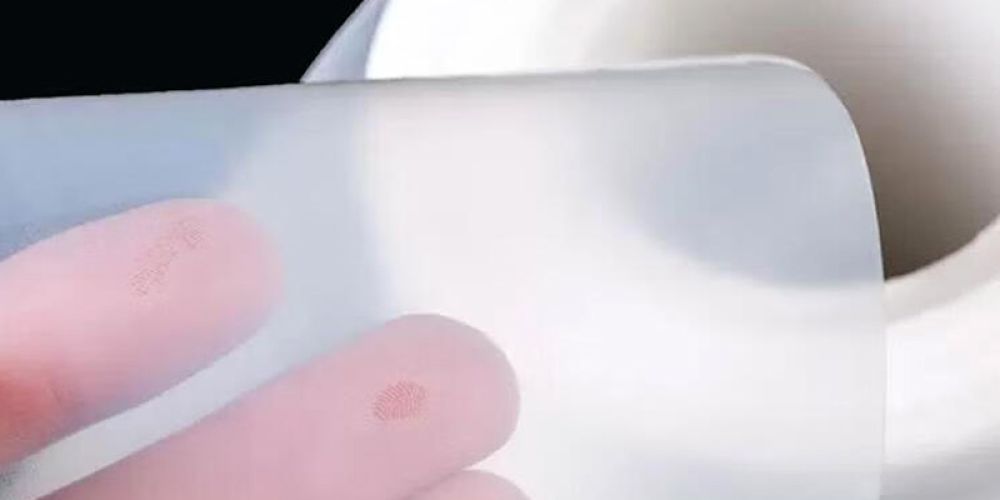
Chemical Inertness: Virtually unreactive with almost all chemical substances; resistant to acids, alkalis, and organic solvents…
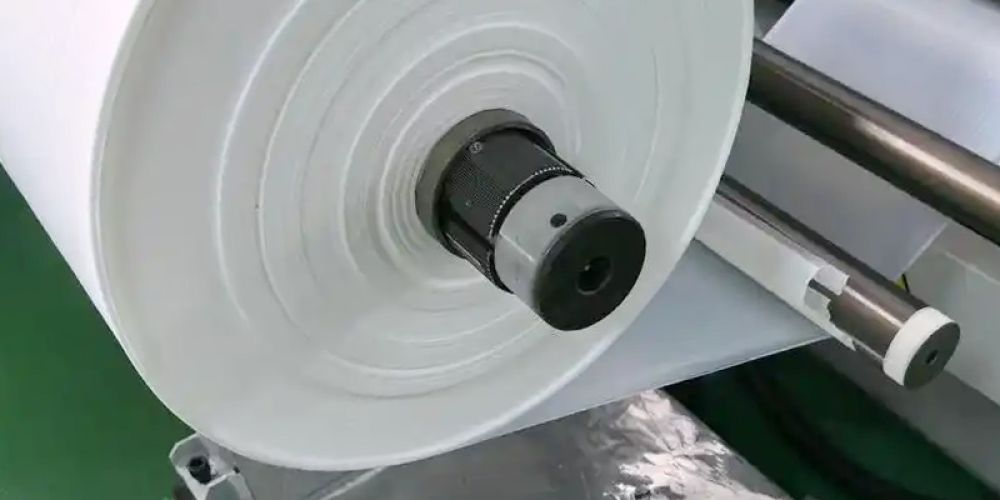
PTFE (polytetrafluoroethylene) film is a high-performance engineering plastic film renowned for its excellent chemical stability, high-temperature…
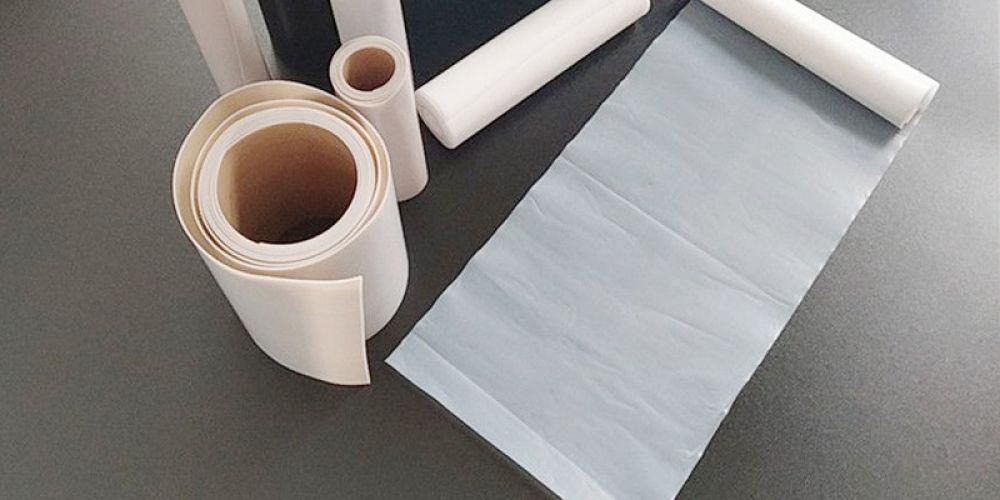
Microporous Structure Porosity exceeds 85%, with 1.4 billion micropores per square centimeter and pore sizes ranging…