
.jpg)
Thin film materials, due to their lightweight, flexibility, and functionality, are widely used in packaging, electronics, automotive, and medical fields. Heat sealing technology is the core process for achieving efficient and reliable film bonding. The following analysis covers four aspects: film types, application scenarios, heat sealing equipment classification, and technological trends.
I. Common Film Types and Their Core Application Scenarios
1. Polyethylene (PE) Film
Characteristics: Low cost, good flexibility, chemical corrosion resistance, but poor temperature resistance (melting point approximately 120℃).
Applications:
Food Packaging: Cling film, stand-up pouches, zipper bags (e.g., snack packaging).
Agricultural Covering: Mulch film, greenhouse film.
Industrial Packaging: Moisture-proof bags, logistics and express delivery bags.
Heat Sealing Requirements: Requires rapid heating (0.5-2 seconds) to avoid film deformation; weld strength must meet 5-10 N/15 mm (according to ASTM F88 standard).
2. Polypropylene (PP) Film
Characteristics: High temperature resistance (melting point 160-170℃), high transparency, and high rigidity.
Applications:
Pharmaceutical Packaging: Infusion bags, pharmaceutical packaging materials (must comply with ISO 11607 standard).
Composite Substrates: Composite with aluminum foil to form high-temperature retort pouches (e.g., self-heating food packaging).
Daily Chemical Packaging: Shampoo and shower gel tubes.
Heat Sealing Requirements: Requires high-precision temperature control (±2℃) to avoid over-melting and perforation.
3. Polyester (PET) Film
Characteristics: High mechanical strength, puncture resistance, good barrier properties (OTR < 1 cc/m²·day).
Applications:
Electronic Packaging: Flexible circuit board (FPC) cover film, battery separator.
Label Materials: Beverage bottle labels, anti-counterfeiting labels.
Industrial Substrates: Solar cell backsheets, display polarizers.
Heat Sealing Requirements: Requires pulsed heating (to avoid continuous heating damaging the substrate), welding pressure must be accurate to 0.1-0.5 MPa.
4. Polyvinyl Chloride (PVC) Film
Characteristics: Good flexibility, high transparency, and strong plasticity, but contains plasticizers (environmentally limited).
Applications:
Medical Products: Infusion tubing, blood bags (must pass USP Class VI biocompatibility testing).
Toy Packaging: Inflatable toys, raincoats.
Architectural Film Materials: Advertising banners, sunshade films.
Heat Sealing Requirements: Requires low-voltage, high-frequency heating (to avoid arc damage to the film); welding speed can reach 50m/min.
5. Functional Composite Films
Types:
Aluminum-Plastic Composite Film: PET/AL/PE structure (used for lithium battery pouches).
Metallized Film: VMPET/CPP structure (used for potato chip packaging).
Multilayer Co-extruded Film: PA/PE/EVOH structure (used for high-barrier food packaging).
Heat Sealing Requirements: Requires selection of compatible welding processes for different layer materials (e.g., ultrasonic welding is suitable for PA layers, hot plate welding is suitable for PE layers). II. Classification and Technical Characteristics of Thin Film Heat Sealing Equipment
1. High-Frequency Heat Sealing Machine (Radio Frequency Welding)
Principle: Utilizes a high-frequency electromagnetic field (13.56MHz or 27.12MHz) to generate heat through friction between polar molecules (such as Cl atoms in PVC).
Applicable Materials: PVC, PU, and films containing plasticizers.
Advantages: Fast welding speed (0.1-1 seconds/piece).
No preheating required, suitable for continuous production.
Smooth weld edges, no slag.
Case Studies: Medical blood bag welding: A manufacturer used a high-frequency heat sealing machine to achieve a three-sided seal on blood bags with a leakage rate of less than 0.01%.
Automotive interior carpets: Welding PVC carpets and sound insulation felt, achieving a weld strength of 20N/15mm.
2. Ultrasonic Welding Machine
Principle: Generates heat through friction between material molecules via ultrasonic vibration (20kHz).
Applicable Materials: Non-polar materials such as PP, PE, PET, and nylon (PA).
Advantages: Environmentally friendly and pollution-free (no glue or solvent required). High welding precision (±0.05mm).
Suitable for thin materials (0.05-2mm).
Case Study: Mask ear loop welding: A manufacturer used an ultrasonic welding machine to achieve rapid connection of N95 mask ear loops to the face shield, with an efficiency of 120 pieces/minute.
Food packaging bags: Welding PP composite film, with welding strength meeting FDA 21 CFR 177.1520 standards.
3. Hot plate welding machine
Principle: The contact surface of the film is melted by a heating plate (150-300℃) and then pressed together.
Applicable materials: Thermoplastic materials such as PE, PP, and TPE.
Advantages: High welding strength (up to 80% of the strength of the base material).
Suitable for large-area welding (e.g., 1m×2m ceiling).
Low equipment cost and simple maintenance.
Case Study: Large water storage bags: Welding PE film, single piece size up to 5m×10m, welding time 3 minutes.
4. Pulse Heat Sealing Machine
Principle: Heats a nickel-chromium alloy wire with a pulsed current, instantly melting the film.
Applicable Materials: PET, nylon, aluminum-plastic composite film.
Advantages: Precise temperature control (±1℃).
Avoids damage to the substrate from continuous heating.
Suitable for welding irregularly shaped structures (such as circular battery packs).
.jpg)
In the construction field, the heat-sealing production methods for different new membrane materials vary depending on…
.jpg)
In the construction field, the heat-sealing of PVDF membrane materials is mainly achieved through processes such…
.jpg)
Due to its unique molecular structure and excellent overall performance, PVDF (polyvinylidene fluoride) membrane material is…
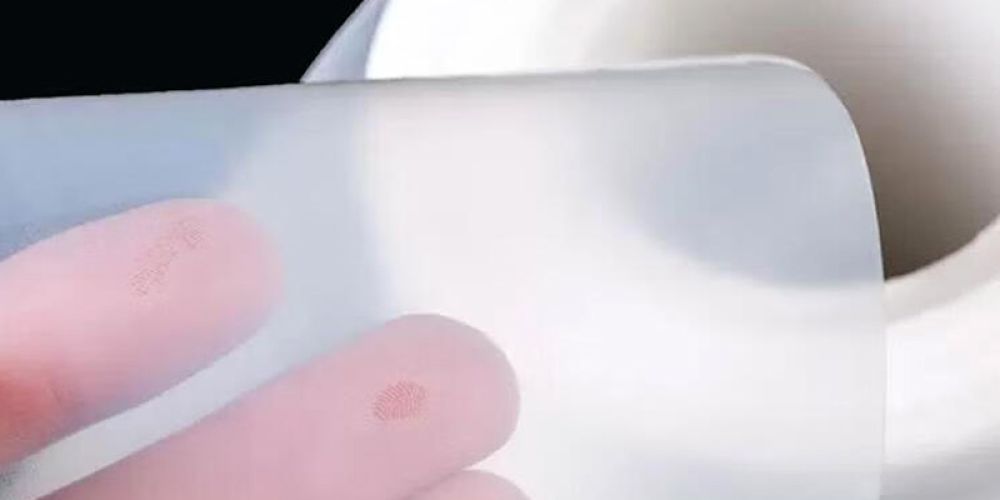
Chemical Inertness: Virtually unreactive with almost all chemical substances; resistant to acids, alkalis, and organic solvents…
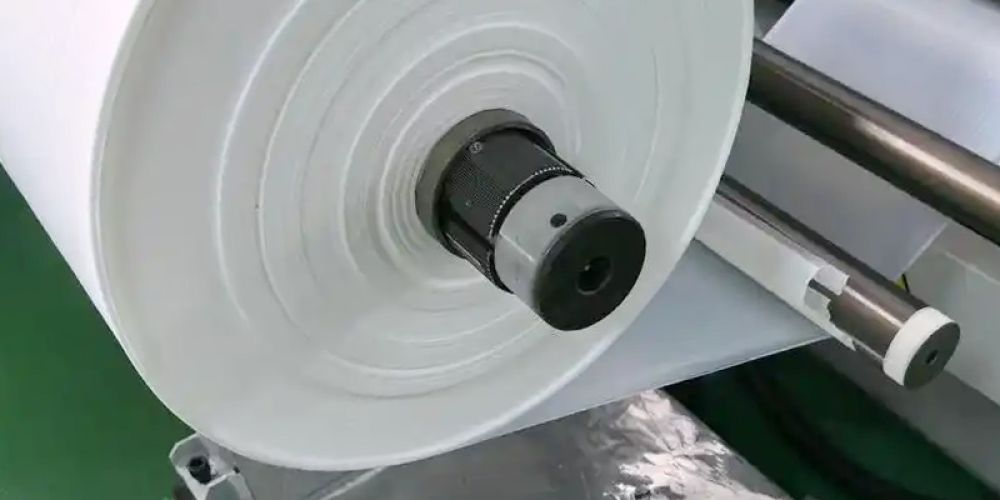
PTFE (polytetrafluoroethylene) film is a high-performance engineering plastic film renowned for its excellent chemical stability, high-temperature…
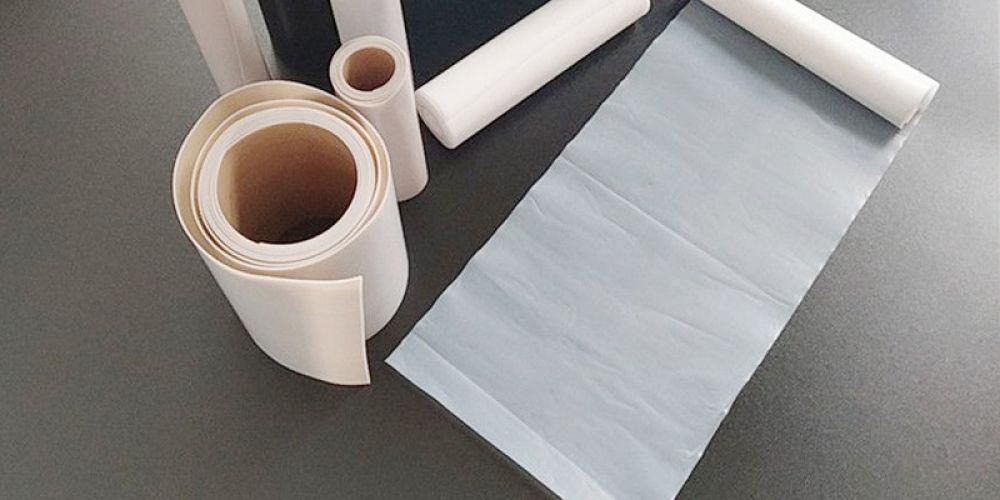
Microporous Structure Porosity exceeds 85%, with 1.4 billion micropores per square centimeter and pore sizes ranging…