
.jpg)
Key Features: Technology-Driven Differentiated Design
1. High-Frequency Electromagnetic Induction Heating: Precise Control of the Melting Process
Principle: An alternating electromagnetic field is generated using high-frequency alternating current (13.56MHz/27.12MHz), causing polar molecules in the membrane material (such as plasticizers in PVC and polar groups in TPU) to vibrate and generate heat through friction, achieving rapid localized melting.
Advantages:
* Uniform Heating: Avoids the localized overheating or underheating problems of traditional hot air welding, resulting in consistent weld strength;
* Concentrated Energy: Only heats the membrane material contact surface (0.1-3mm), reducing the heat-affected zone and preventing membrane deformation;
* No Open Flame Safety: Suitable for flammable environments (such as on-site welding of inflatable membrane structures).
2. Track-Type Moving System: The "Straight-Line Engine" for Long-Dimensional Welding
Structure: Composed of high-precision guide rails (straightness ±0.05mm/m), a servo motor drive module, and a welding head lifting mechanism, supporting horizontal/vertical multi-directional movement.
Advantages:
* **Extra-long welding capacity:** Customizable track length (typically 3-20 meters), breaking through the limitations of traditional equipment (e.g., manual welding only 1-2 meters);
* **High repeatability:** Servo motor controls the movement step distance, with a repeatability error ≤0.1mm, ensuring weld straightness;
* **Multi-station adaptability:** Can be equipped with a rotary table or tilting mechanism to achieve circumferential welds (e.g., air chamber partitions in inflatable boats) or three-dimensional structure welding.
3. **Dual closed-loop control of pressure and temperature:** Intelligent protection for weld quality.
* **System composition:**
* **Pressure control:** A cylinder/hydraulic system provides welding pressure (adjustable from 0.1-5MPa), with real-time feedback from a pressure sensor;
* **Temperature control:** An infrared thermometer monitors the membrane surface temperature, and a PLC dynamically adjusts the high-frequency power (e.g., PVC welding temperature 160-180℃). Advantages: Parameter Adaptation: Automatically matches pressure and temperature based on membrane thickness and material, reducing manual adjustment time; Weld Consistency: Dual closed-loop control ensures that the penetration depth and width error of each weld segment is ≤5%, improving product qualification rate; Material Protection: Prevents overpressure (leading to membrane perforation) or overheating (causing material degradation), extending mold life.
.jpg)
In the construction field, the heat-sealing production methods for different new membrane materials vary depending on…
.jpg)
In the construction field, the heat-sealing of PVDF membrane materials is mainly achieved through processes such…
.jpg)
Due to its unique molecular structure and excellent overall performance, PVDF (polyvinylidene fluoride) membrane material is…
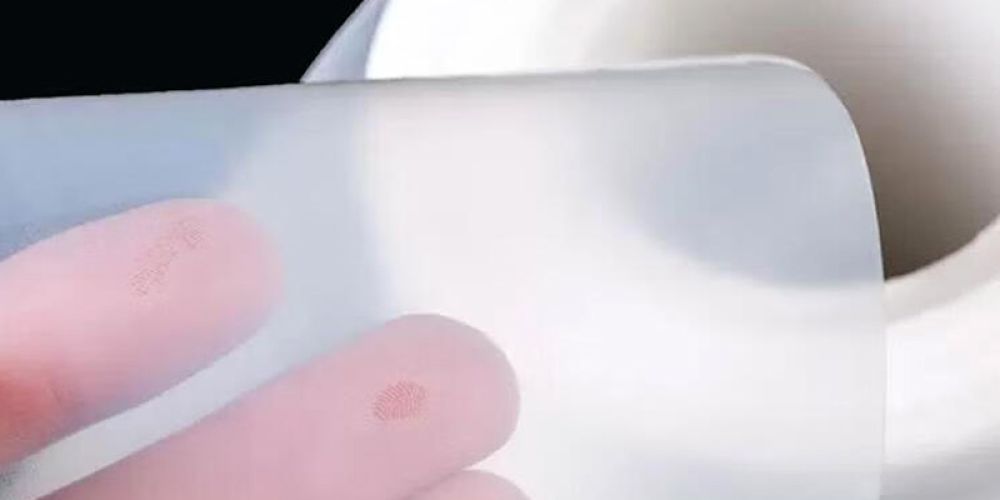
Chemical Inertness: Virtually unreactive with almost all chemical substances; resistant to acids, alkalis, and organic solvents…
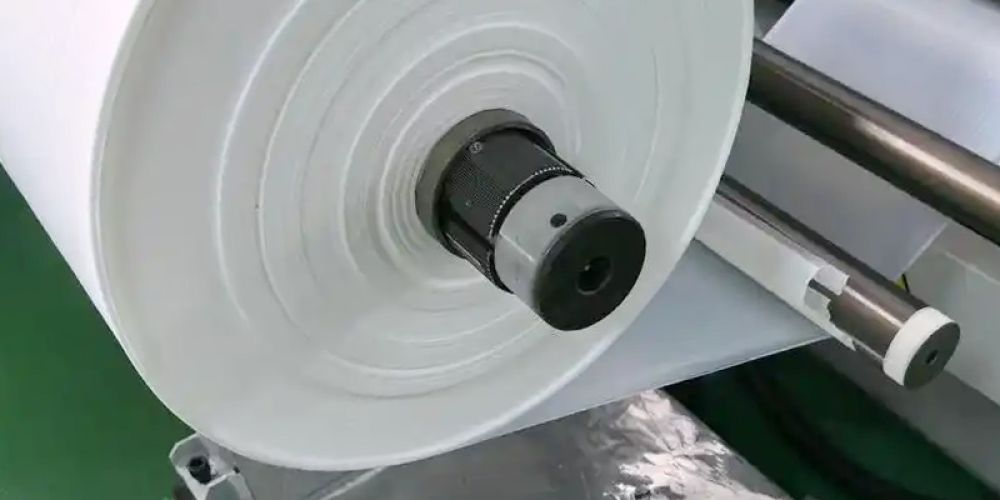
PTFE (polytetrafluoroethylene) film is a high-performance engineering plastic film renowned for its excellent chemical stability, high-temperature…
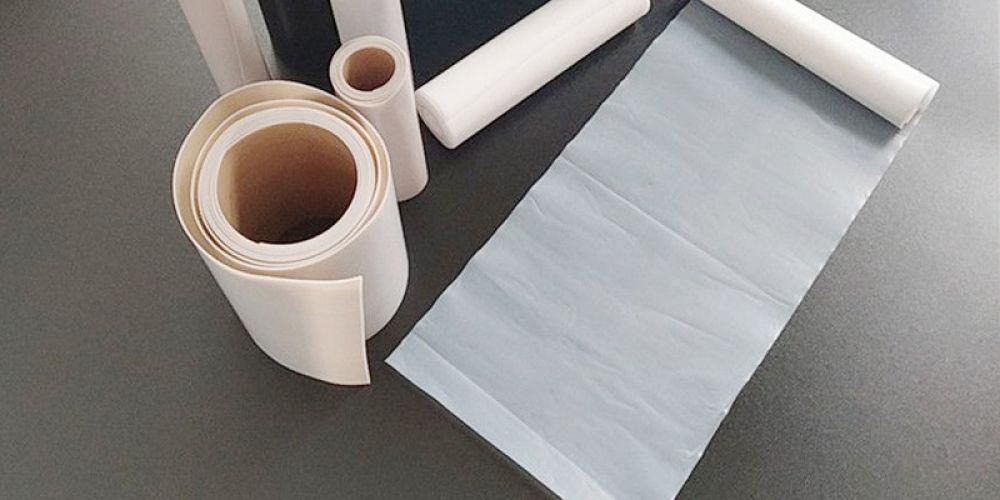
Microporous Structure Porosity exceeds 85%, with 1.4 billion micropores per square centimeter and pore sizes ranging…