
.jpg)
Core Understanding: The essence of PVC heat sealing is "coating melting and re-curing".
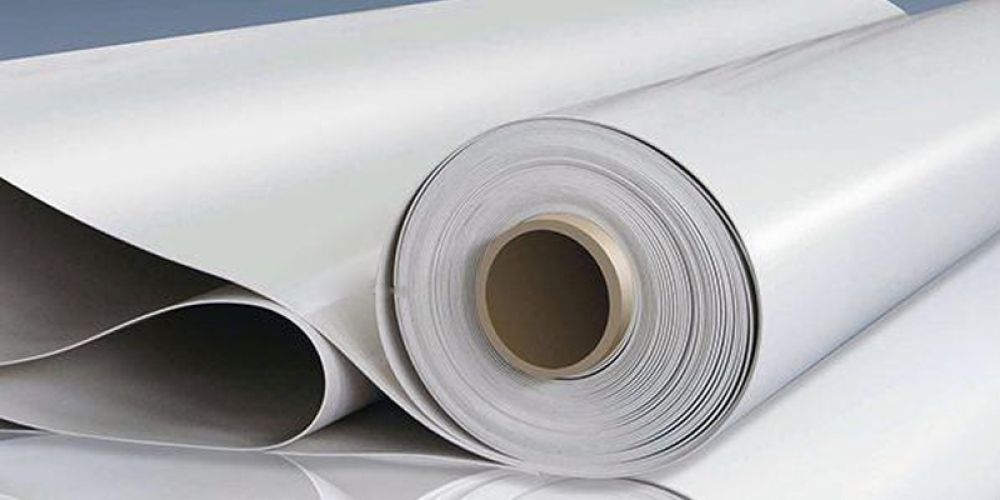
PVC membrane materials consist of a polyester fiber base fabric and a PVC coating on the surface. The goal of heat sealing is not to melt the base fabric, but to heat the PVC coatings of the two membrane materials to a molten, viscous state, allowing them to penetrate and fuse under pressure, and then re-curing into a single unit after cooling.
Part 1: Core Parameter Adjustment
1. Temperature: Finding the "Melting without Burning" Points to Note:
Decomposition Temperature: Due to the chemical properties of PVC, when the temperature exceeds 180-200°C (depending on the formulation), it will begin to decompose, releasing hydrogen chloride (HCl) gas. This will cause the coating to carbonize and become brittle, weakening the weld strength.
Sensory Judgment: At the optimal welding temperature, the extruded molten material is a transparent white or pale yellow gel. If thick white smoke is emitted or the molten material turns dark yellow or brown, accompanied by a pungent odor, it indicates that the temperature is too high and decomposition has begun.
Thickness Influence: The thicker the membrane material, the more heat is required. However, simply increasing the temperature significantly cannot address the thickness issue; a combination of reduced speed and increased heat treatment time should be considered.
2. Speed: Precisely Matched with Temperature
Points to Note:
Core Formula: Total Heat Input = Temperature × Heat Treatment Time (Determined by Speed). This is the fundamental logic of adjustment.
Too Fast: Even with the correct temperature, insufficient heating time results in only surface softening of the coating, with the interior not fully melted, leading to "false welds" or "incomplete welds." During peeling, the coating will separate neatly.
Too Slow: Equivalent to prolonged heating at high temperatures, easily causing localized overheating and decomposition. For high-frequency welding, an excessively slow speed may also "break through" the coating due to excessive energy concentration.
3. Pressure: Uniform Boost
Points to Note:
Insufficient Pressure: The molten coating cannot fully interweave, potentially resulting in air bubbles or delamination in the weld, creating water seepage channels and weaknesses in strength.
Excessive Pressure: This is the most common and insidious mistake! Excessive pressure will excessively squeeze the molten PVC coating out of the weld. Causes:
Weld thinning: The total thickness at the joint is lower than that of the base material, becoming a physical weak point.
Exposed base fabric: The coating at the weld edge is squeezed away, exposing the base fabric fibers, affecting sealing and strength.
.jpg)
In the construction field, the heat-sealing production methods for different new membrane materials vary depending on…
.jpg)
In the construction field, the heat-sealing of PVDF membrane materials is mainly achieved through processes such…
.jpg)
Due to its unique molecular structure and excellent overall performance, PVDF (polyvinylidene fluoride) membrane material is…
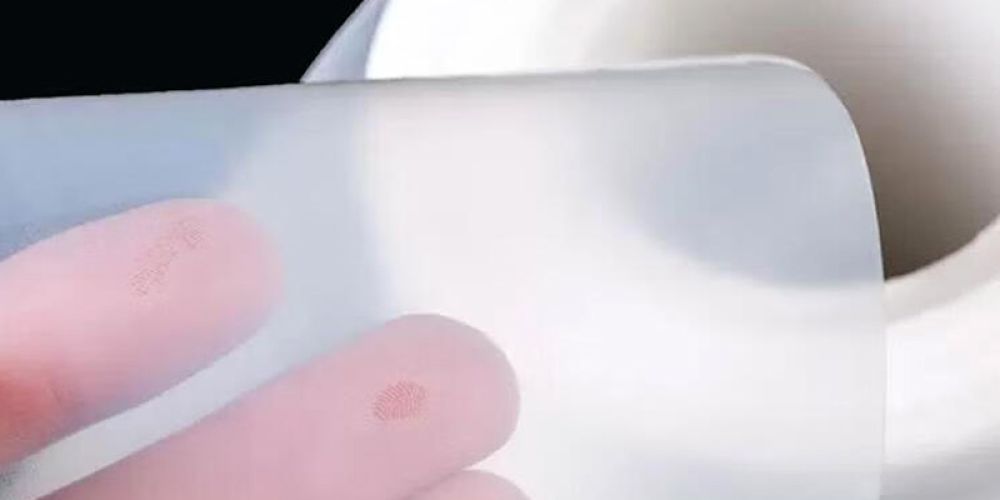
Chemical Inertness: Virtually unreactive with almost all chemical substances; resistant to acids, alkalis, and organic solvents…
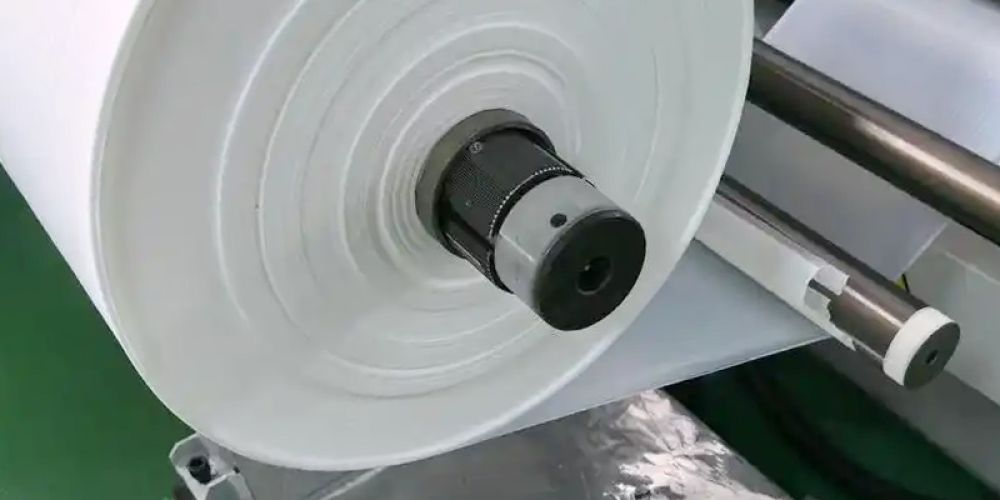
PTFE (polytetrafluoroethylene) film is a high-performance engineering plastic film renowned for its excellent chemical stability, high-temperature…
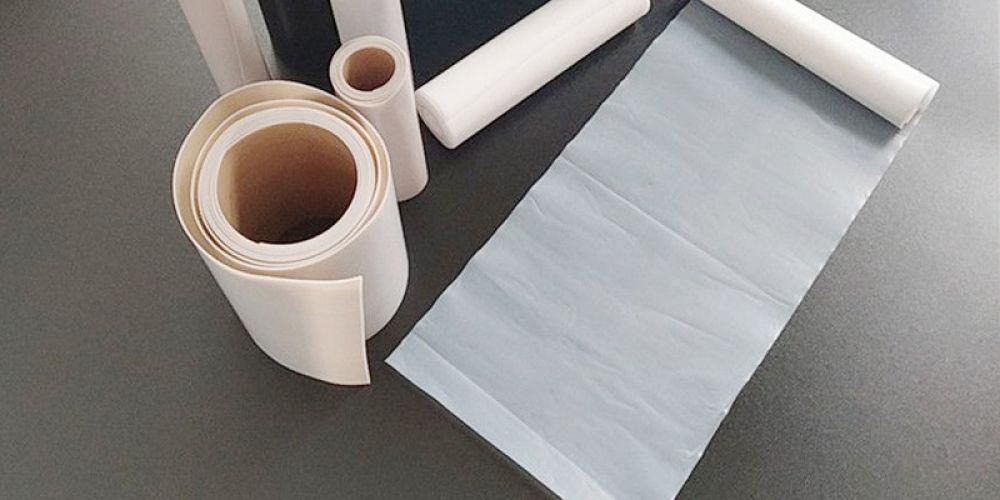
Microporous Structure Porosity exceeds 85%, with 1.4 billion micropores per square centimeter and pore sizes ranging…